

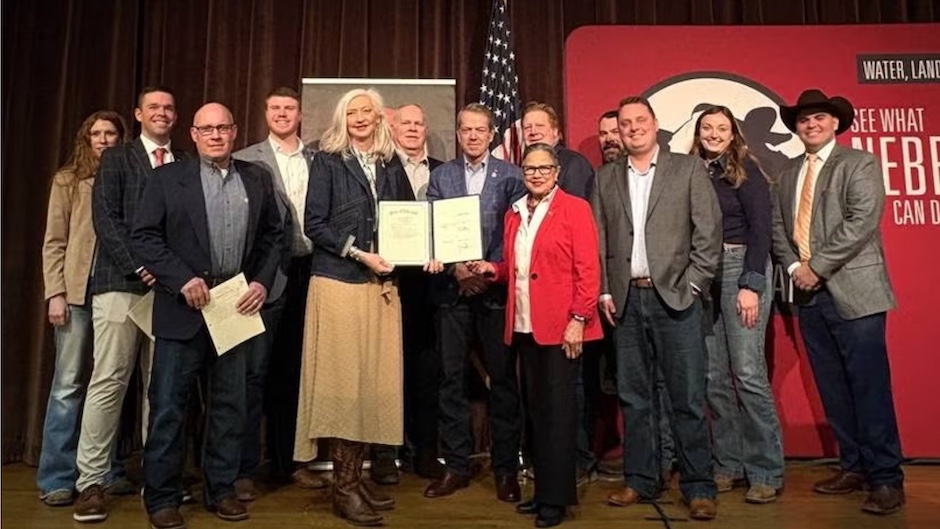
Lincoln, Nebraska – At the Nebraska Dairy Convention and Trade Show in West Point, Governor Jim Pillen signed new legislation designed to improve how counties handle zoning requests for agricultural producers. The measure, LB 663, creates a uniform, transparent, and faster process for reviewing and approving conditional use permits and special exemption applications — a change supporters say will help livestock operations grow while strengthening rural economies.
The bill was signed in front of state lawmakers, agriculture leaders, and industry advocates, highlighting its importance to Nebraska’s expanding dairy and livestock sectors. State officials say the law will reduce uncertainty and delays that have long frustrated producers seeking to expand or invest in new facilities.
Governor Pillen emphasized the role agriculture plays in Nebraska’s economy and said the new law will help producers plan and grow with confidence.
“This is a huge win for our dairy industry and all livestock development in Nebraska,” said Gov. Pillen. “We are becoming a national leader in dairy growth. If we want to capture more of that economic impact here at home – creating careers, supporting farm families, and strengthening our rural communities — we must make it easier for producers to expand and invest.”
New Standards for County Zoning Decisions
LB 663, introduced by Senator Tanya Storer and supported by Senator Rita Sanders, chair of the Government, Military and Veterans Affairs Committee, sets new requirements for county boards and commissions when reviewing permit applications.
The law mandates education hours for certain county officials involved in zoning decisions. It also requires that conditional use permits and special exemptions be evaluated only according to county zoning regulations, ensuring decisions are consistent and grounded in established rules.
In addition, the legislation establishes clear timelines for how long counties can take to act on permit applications. Counties must determine whether an application is complete within 30 days and notify the applicant within 10 days. Once an application is deemed complete, county officials have 90 days to approve or deny it. If no action is taken within that period, the application is automatically approved.
Senator Storer described the measure as the result of extensive collaboration between local governments and the agriculture industry.
“LB 663 is the result of over a year of collaborative work with both NACO and the agriculture industry,” said Sen. Storer. “This legislation aims to improve our zoning laws by preserving the local control counties need to best represent their geographic areas while creating more consistency and transparency for our ag producers seeking to expand and diversify their operations.”
Balancing Efficiency With Local Oversight
To address concerns from county officials, lawmakers added an amendment to the final bill allowing local authorities to require a new application if new information emerges during the review period that could materially affect the request. If this occurs, the 90-day review clock resets, giving counties additional time to evaluate the updated proposal.
Agriculture leaders across the state welcomed the measure, saying it will bring clarity and predictability to a process that directly affects farm and ranch operations.
“Nebraska’s farm and ranch families are committed to this state and to building a strong future for the next generation,” said Mark McHargue, president of the Nebraska Farm Bureau. “LB 663 brings much-needed clarity, consistency, and accountability to a zoning process that directly impacts farmers, ranchers, and rural communities. When producers are making major long-term investments, they need clear expectations and reasonable timelines.”
Livestock producers also voiced strong support. Speaking for Nebraska pork producers, President Walt Traudt praised the legislation for improving transparency and predictability.
“This legislation creates a more transparent and predictable livestock siting process, including reasonable timelines for permitting decisions. That certainly allows producers to plan for the future, invest with confidence, and continue supporting responsible growth and economic opportunity in rural communities across Nebraska.”
Supporters say LB 663 represents a major step toward modernizing zoning procedures while preserving local control. By establishing clear expectations and timelines, the law aims to reduce delays, prevent confusion, and support responsible agricultural expansion.
As Nebraska continues to grow its dairy and livestock industries, state leaders believe the new zoning framework will help rural communities attract investment, create jobs, and ensure the next generation of farm families can thrive.

